
In less than four full (so, so full – pun intended) days, Ho Chi Minh became one of my favorite destinations for food. Prior to visiting Vietnam, most of my exposure to their cuisine had been through banh mi and pho at chain restaurants and stalls. But their food, and the culture around it, is as wide and rich as their history.

The Food Tour
We had planned a walking food tour for our first evening. With this in mind, I survived on water and a few snacks during the day. This turned out to be a good decision because we tasted no fewer than 13 kinds of food! Some of my favorites were the fish noodle soup, rice cracker with banana slices, banh mi, and caramel flan.
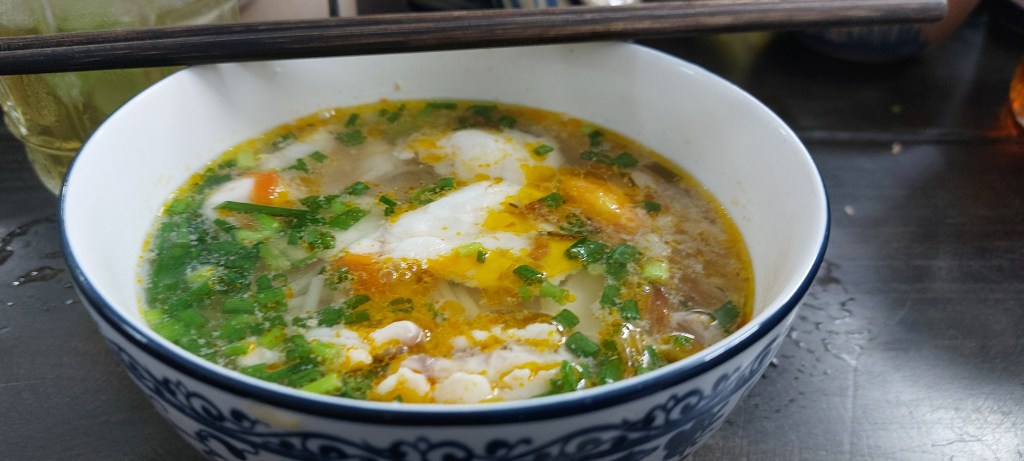
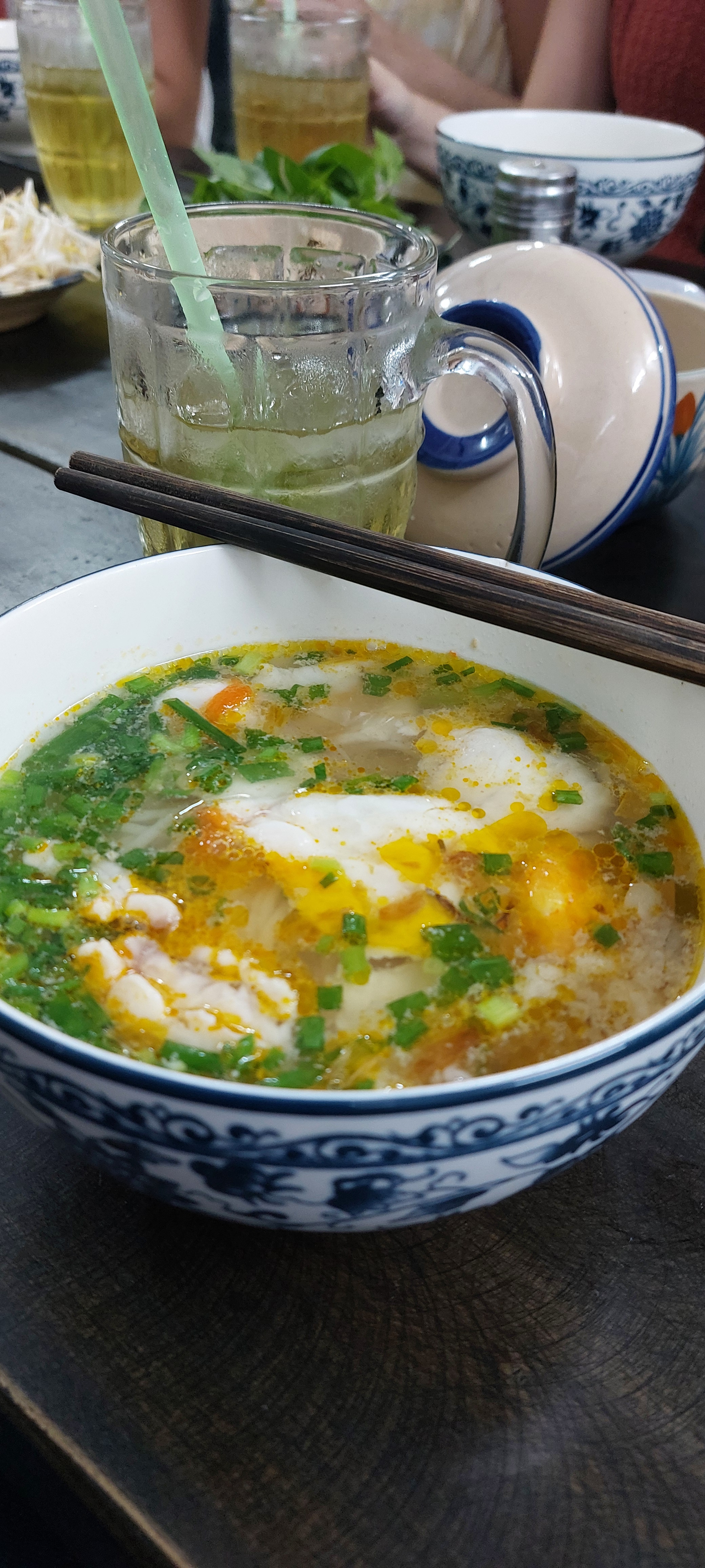
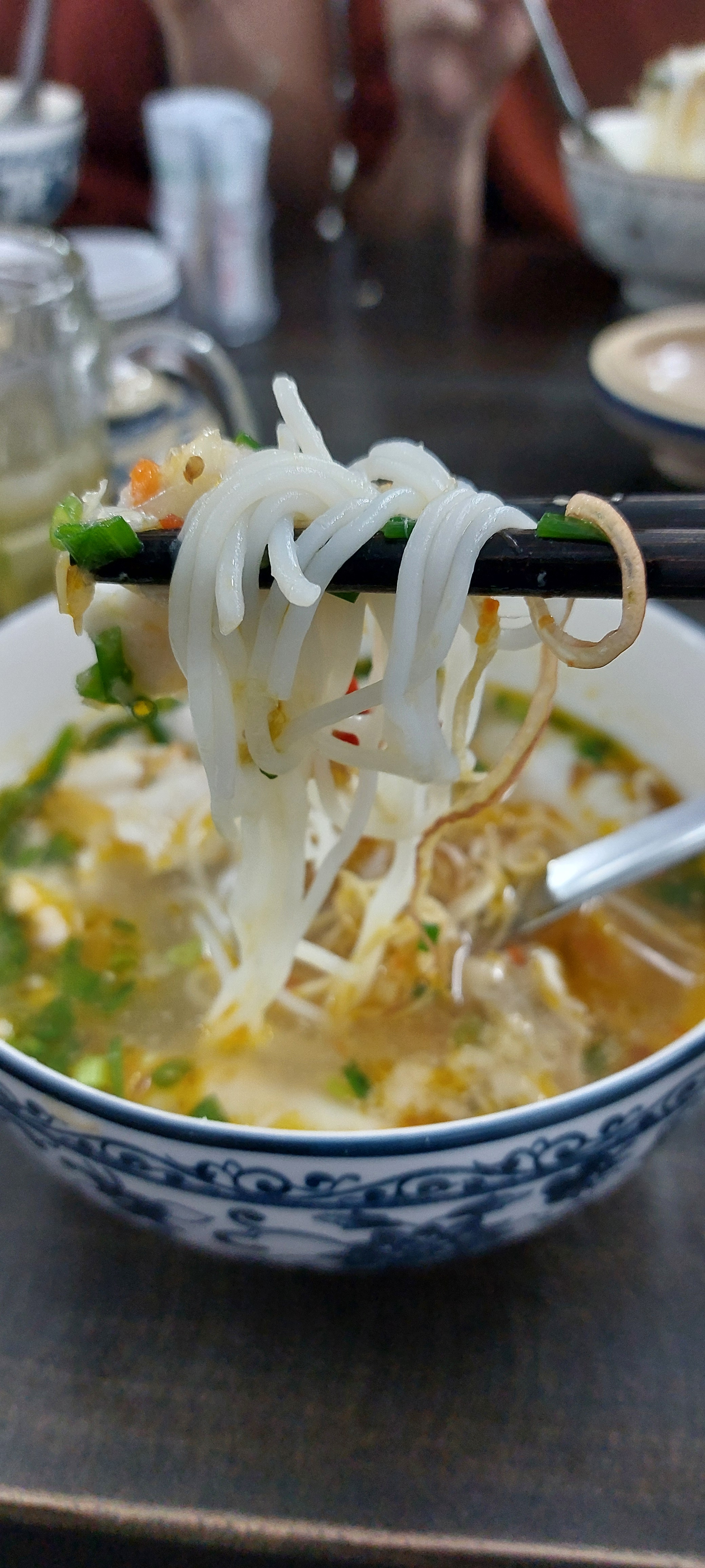
While pho is likely the most widely known Vietnamese broth-based dish, they have a variety of savory, comforting soups. The first thing we were served was fish noodle soup (bún cá kiên giang), which one of our tour guides, Jenni, said is a hit even with guests who aren’t big fans of fish. We dug into chewy noodles, aromatic broth, and tender pieces of fish. I loved the crunchy surprise of some long, thinly sliced onions mixed in with the shallots.
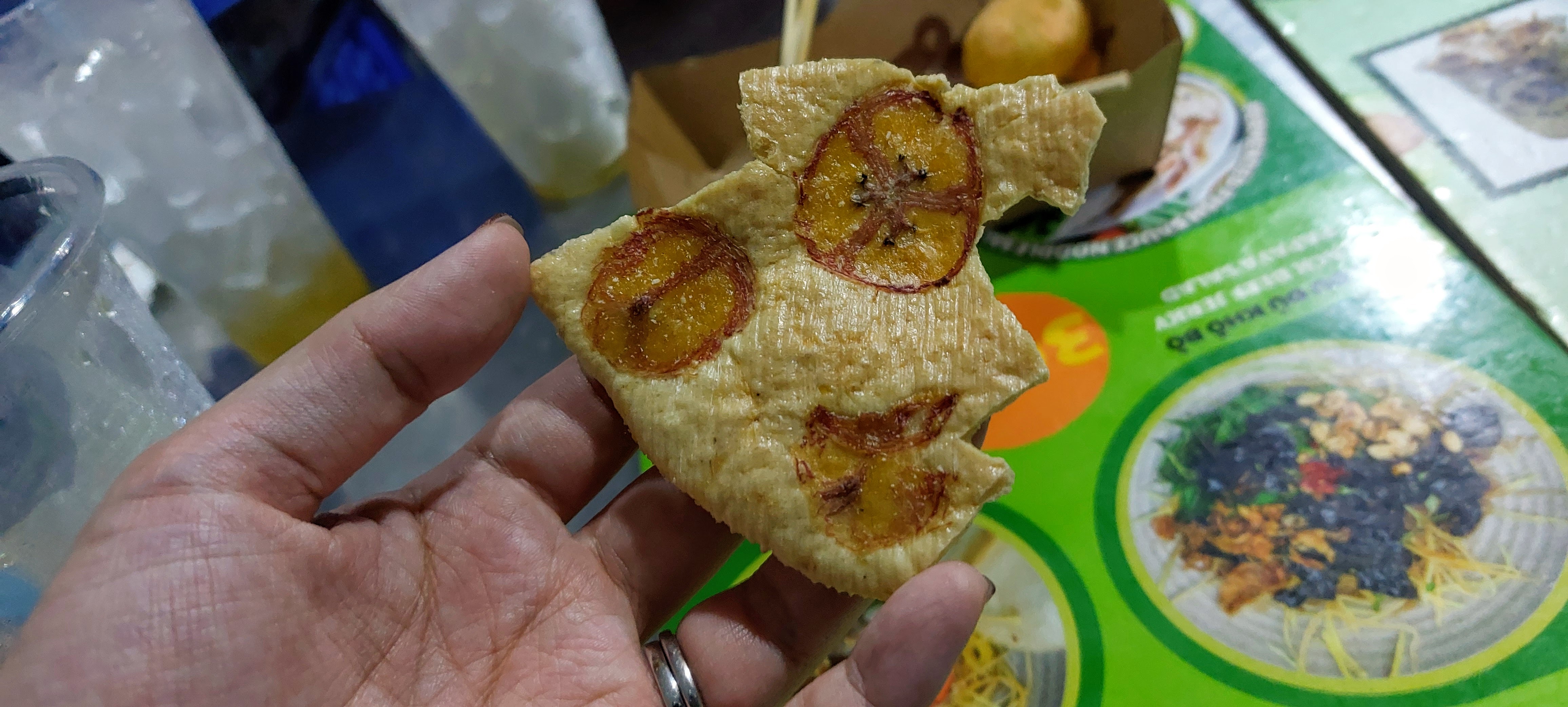
At our second stop, we sat down for a sampling of street food. Rice crackers are used in some snacks, like Vietnamese pizza, or eaten alone. A sweet alternative is the rice cracker with banana. It’s easy to tell them apart – you can see the individual banana slices! We got a large piece and cracked it into smaller portions to share.

A funny side note: on our way to this stop, the power went out all over the city. Our guides, Jenni and Kelvin, kept us updated and reassured us that we wouldn’t miss out on anything due to the outage. Luckily, the lights came back on while we were eating, and we continued on our merry way.
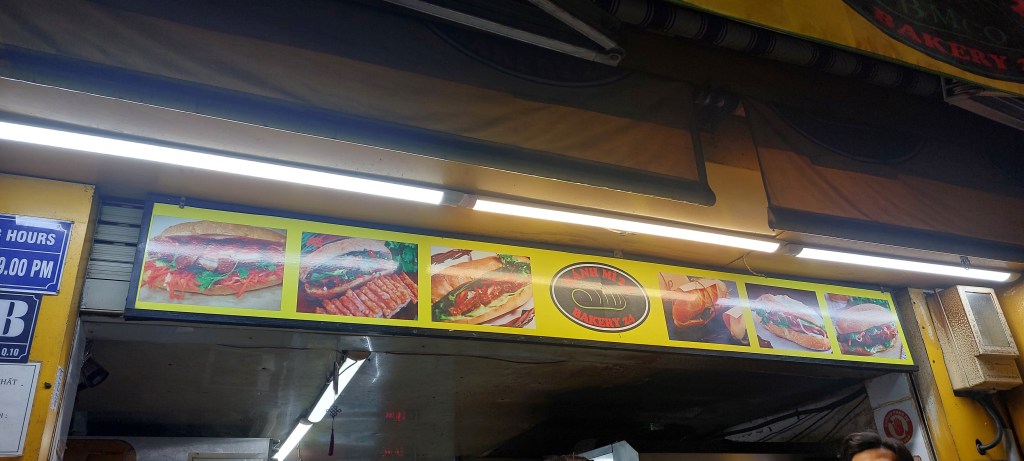
The French influence on Vietnam after decades of colonization shows up all over Ho Chi Minh, in its architecture, infrastructure, and food. At our next stop, we saw and smelled baguettes coming fresh out of the oven, ready to be assembled into banh mi sandwiches. The baguettes are smothered with pâté and stuffed with pork and an assortment of fresh and pickled vegetables.
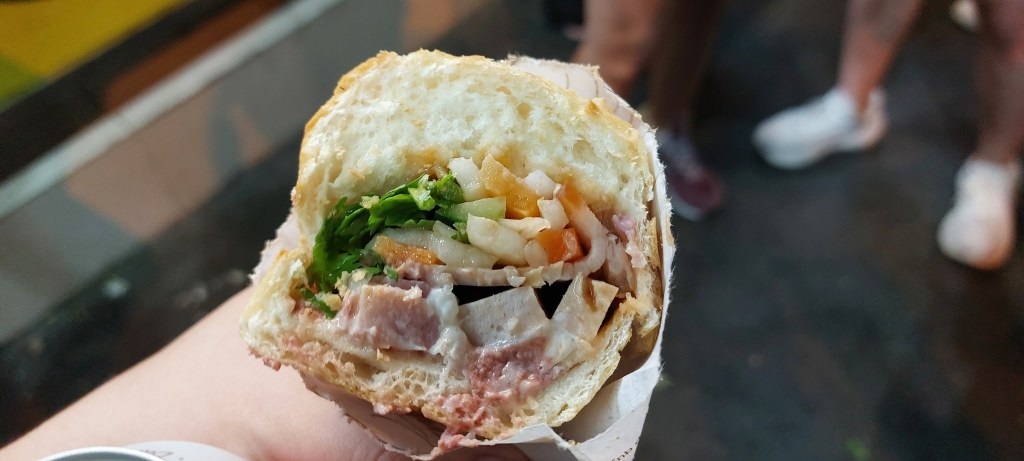
Typically, Filipinos don’t consider a sandwich a meal. (I learned this as a child, and my Japanese father, raised in the USA, was scandalized when I told him.) This is mainly because “real food” in the Philippines comes with a cup of rice – otherwise, it’s thought of as a snack. But this banh mi was as filling as some rice meals and had all the components that, in my opinion, make up a “real” meal: carbs, meat, vegetables, and happiness. We walked to the next stop while chowing down on our sandwiches, some of us drinking beer to wash it down. (Eating and drinking alcohol while walking around in public! Another thing my Japanese father would probably disapprove of.)
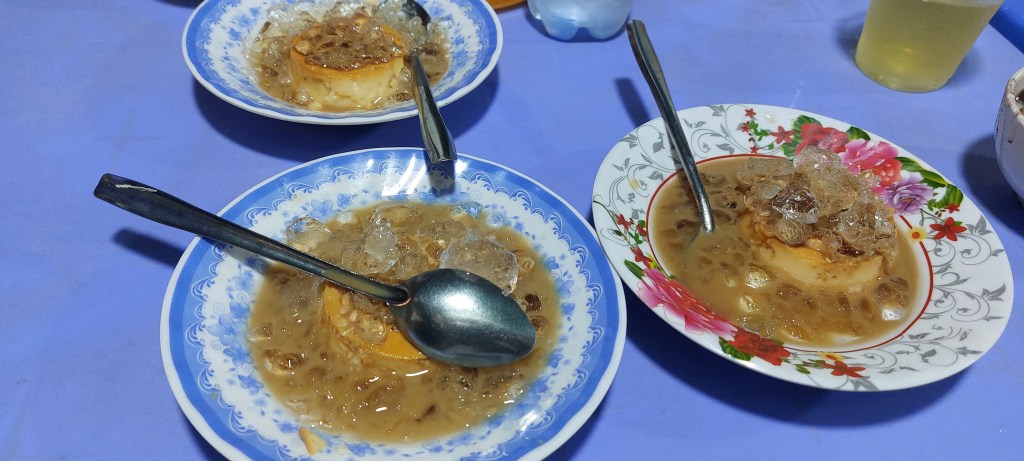
Dessert was familiar ingredients in a not-so-familiar combination: a serving of caramel flan, also known as leche flan, doused in sweet coffee and ice. I’ve had them separately many times but never thought to put them in the same bowl. It was a refreshing end to the tour. We were all just about ready to burst from everything we ate, but you always have to save at least a little room for dessert.
As I was planning this post, I thought it would be easy to pick out a few favorites from the tour to feature. However, there truly wasn’t anything we ate that I didn’t like. So here are three honorable mentions:
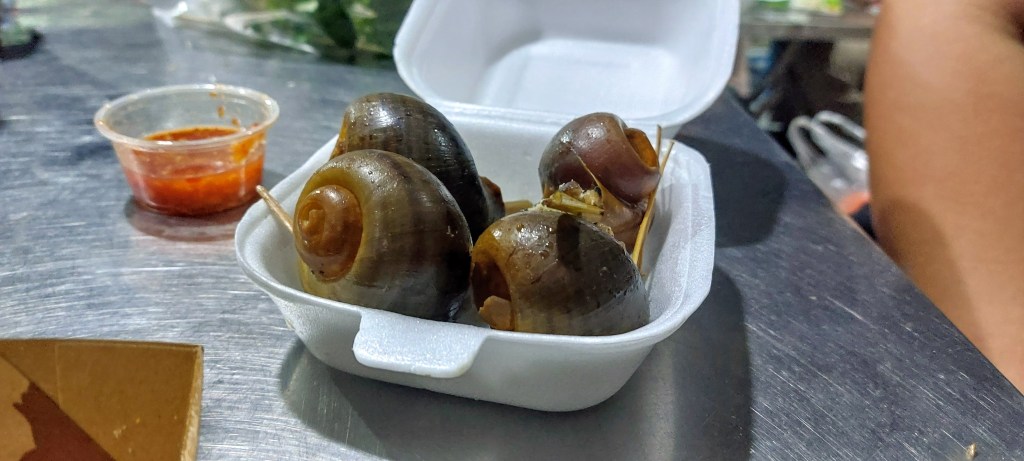
Another hint of French influence, these snails are a popular street food. French escargot is made with land snails; ốc nhồi thịt uses sea snails. We tried a version mixed with minced pork and wrapped in lemongrass. You use the ends of the lemongrass to remove it from the shell.
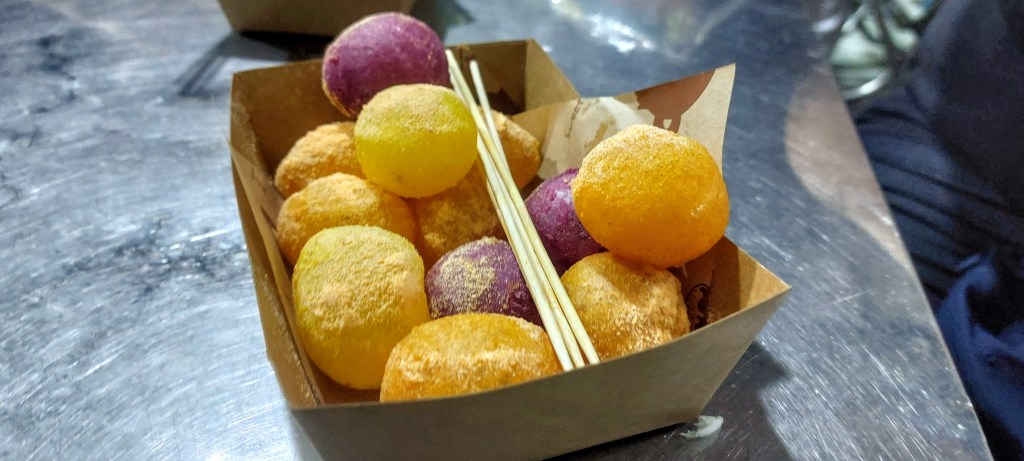
These sweet potato balls, khoai lang bong bóng, are hollow on the inside and dusted with artificial cheese powder. They are aptly called “balloons.”
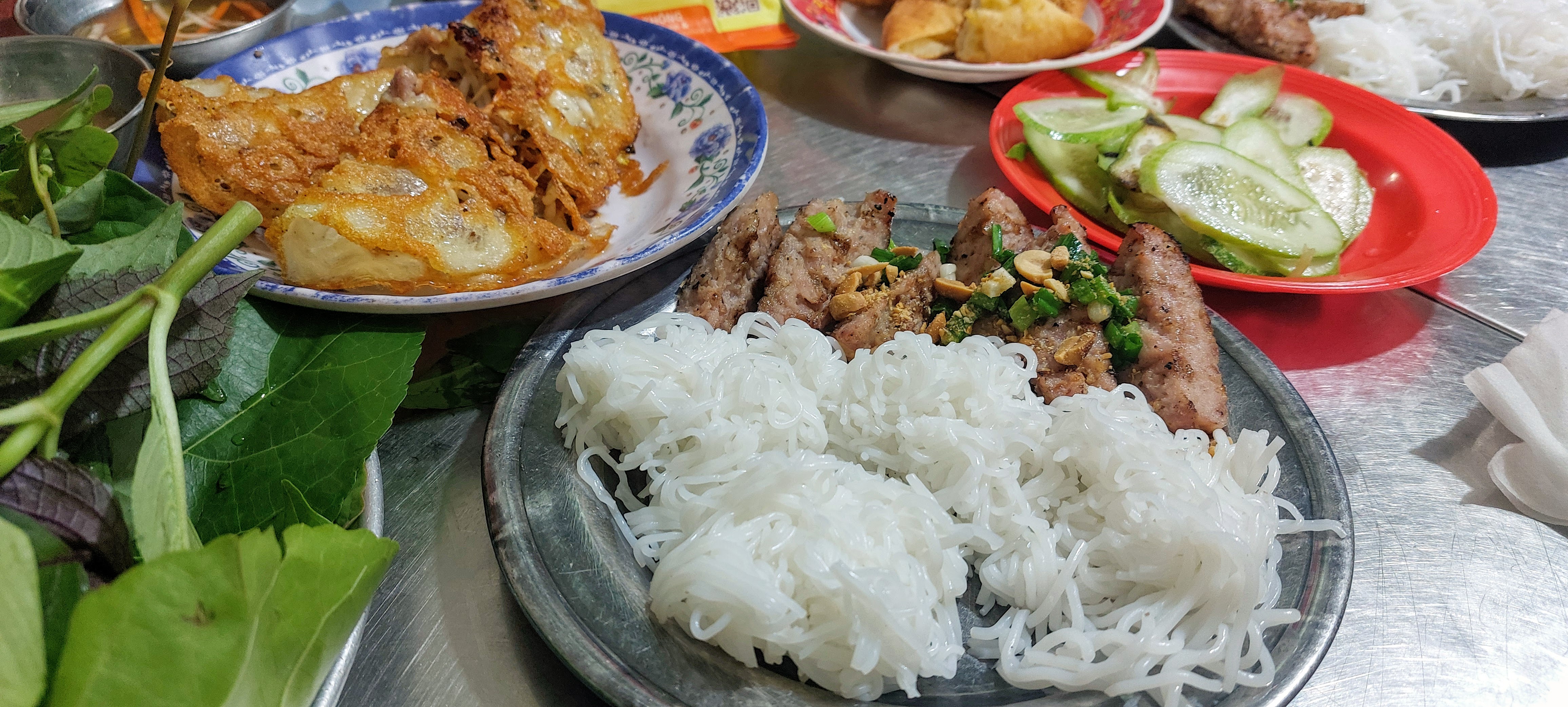
Here, we learned how savory pancakes (bánh xèo) are made and got a rundown of some Vietnamese herbs before assembling everything into rolls.
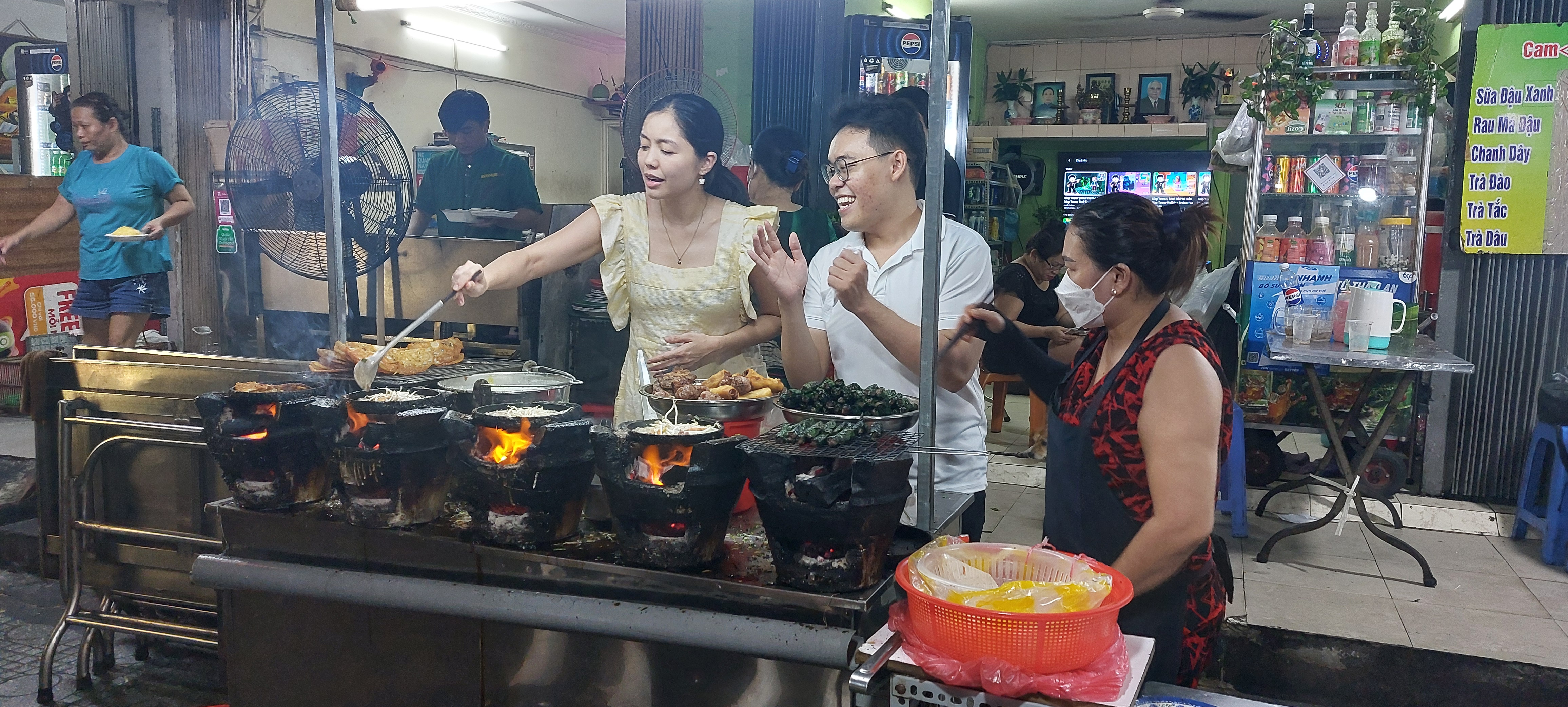
This tour was a highlight of our trip. We learned a lot and stuffed our faces – two of my favorite activities. If you find yourself in Ho Chi Minh, book with Saigonese Experience! Check out their website for more information.
More Veggies
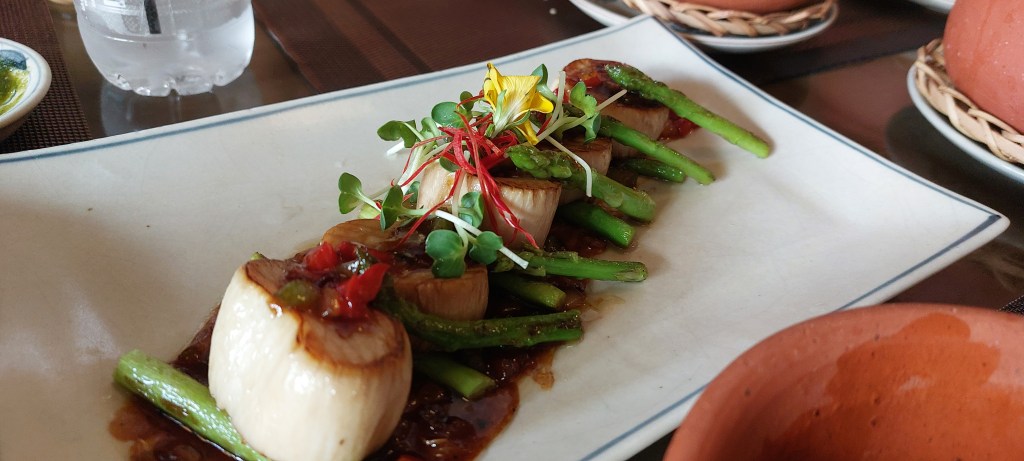
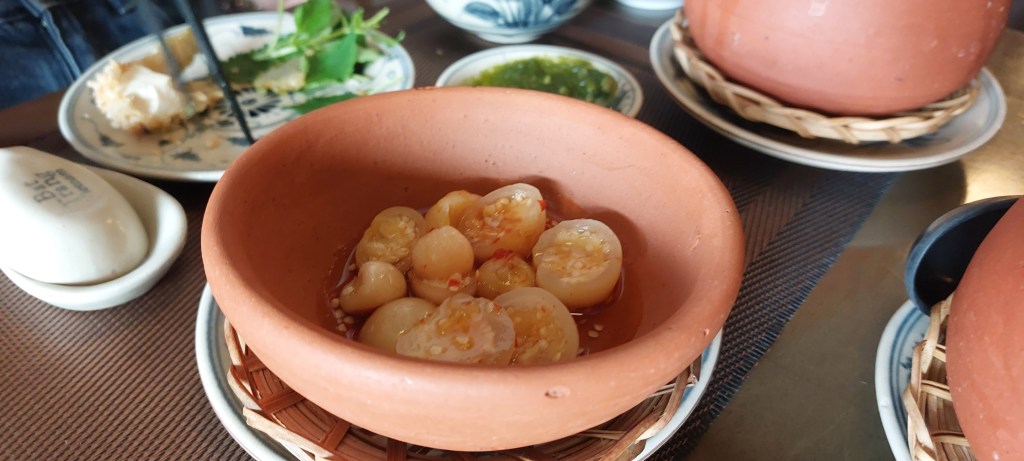
After the coffee workshop, we headed to Vị Quê Kitchen, a vegan restaurant with a wide selection of interesting plant-based dishes. Naturally, we had to try a ton of them. My top three were the crispy tofu with coriander sauce (đậu hủ Vị Quê sốt ngò rí), baked king oyster mushroom with sesame sauce (nấm bàu ngư sốt mè đen), and pickled eggplant.
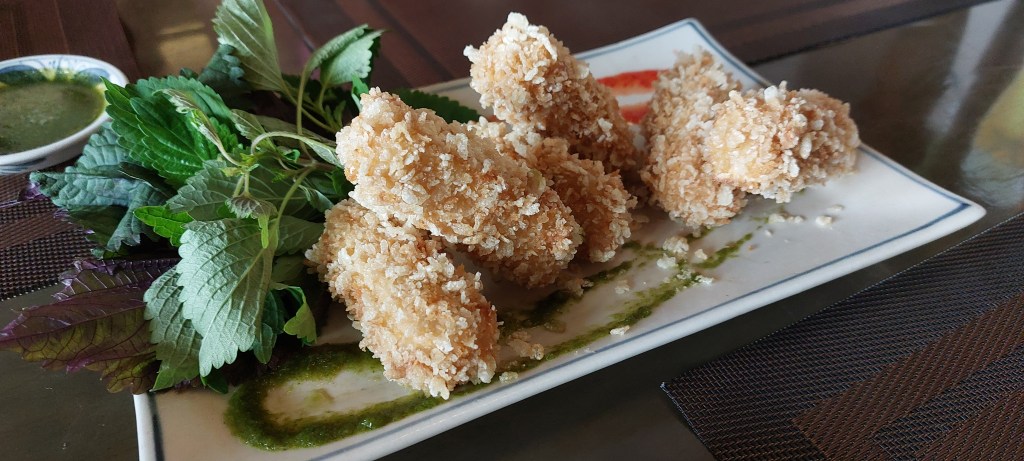
The crispy tofu (VND138,000, about PHP300) was a perfect balance of crunch on the outside and soft, almost runny tofu on the inside. I liked that it didn’t taste or feel oily.
In the baked king oyster mushroom dish (VND148,000, about PHP322), they slice up and serve pieces of the stem instead of the cap. This stem was impressively thick. The mushroom is complemented by some asparagus spears, with everything in a savory sesame sauce. This was easily the most filling dish we had.
I love pickled vegetables and will eat them whenever they’re available, but this side dish was something new to me. The eggplants were so tiny they looked like pale cherry tomatoes. Another first for me – white eggplants! They were tart and crunchy.
For more information on Vị Quê Kitchen and links to all of their socials, check out their website.
More Meat
Steak Love is a chain restaurant that specializes in – you guessed it – steaks. We had a late lunch at their Độc Lập branch and shared a combo plate and some pasta. Their Combo Tender Love comes with two cuts, a tender and a fillet, as well as grilled mussels and stir-fried vegetables. The whole thing is VND695,000, which, after conversion, is only PHP1,504.
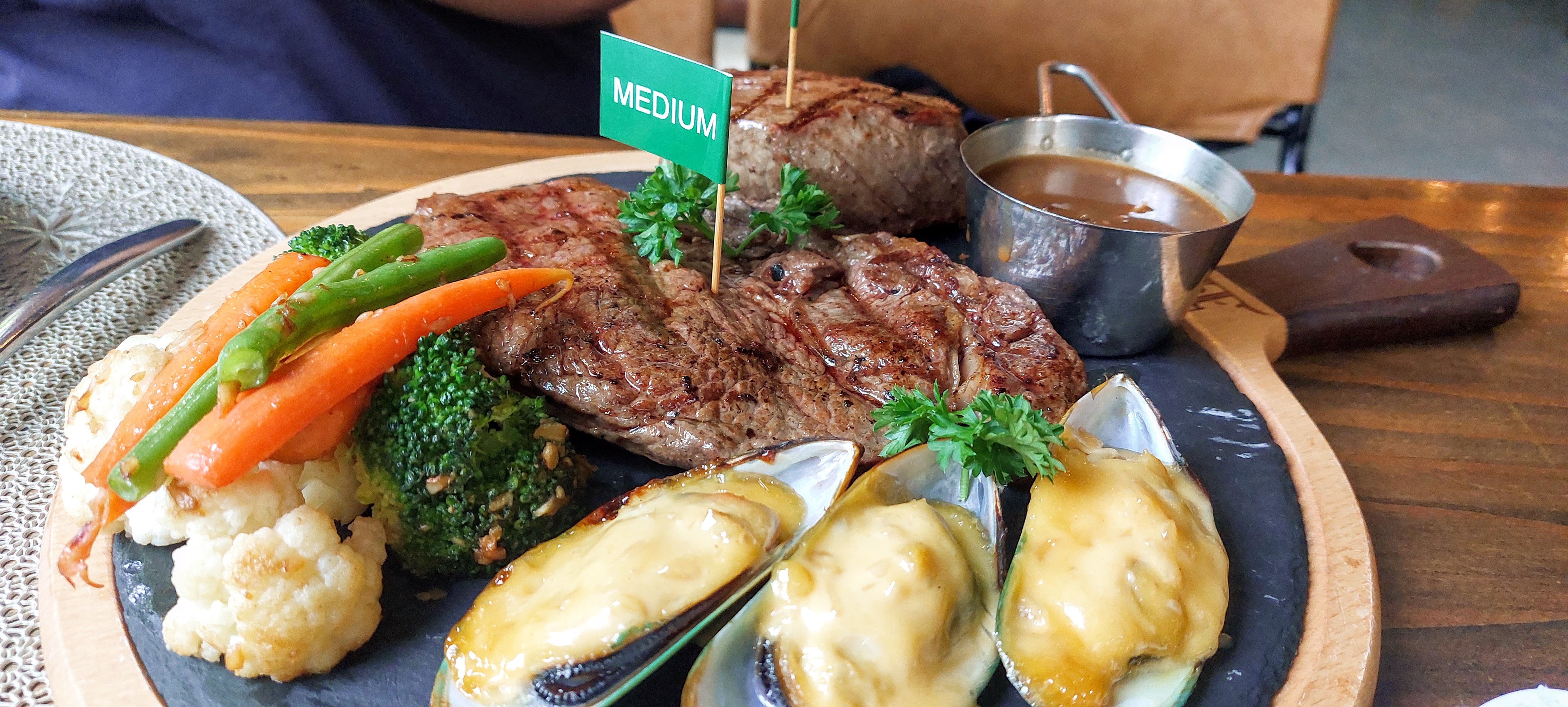
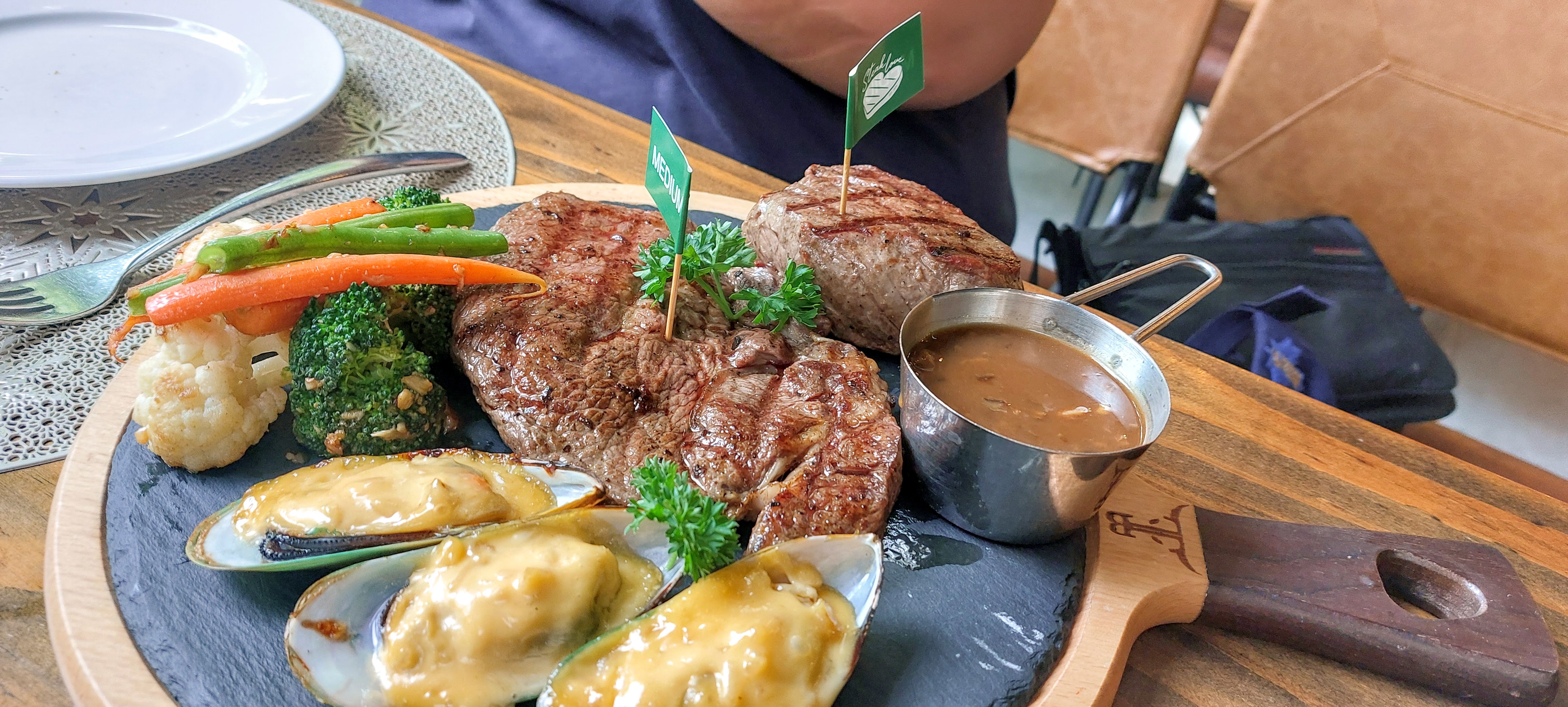
The steak is served with mushroom gravy, but even without sauce, the meat is so flavorful. We liked the miso mayonnaise on the mussels – a little kick of spice that didn’t take away from the umami.
Their bolognese pasta was just al dente enough. The sauce was tart and a little sweet, with a couple of sliced cherry tomatoes thrown in, adding to the freshness.
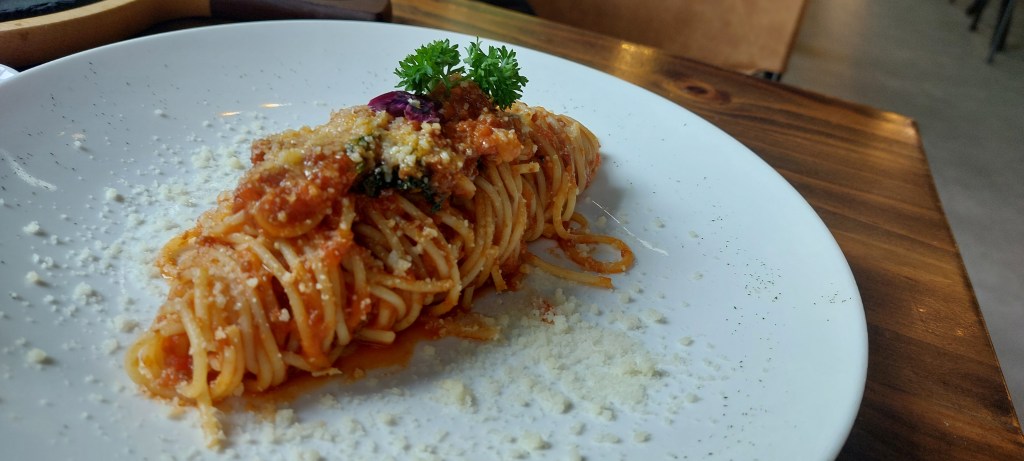
This branch of Steak Love is located at 106 Nguyễn Thị Minh Khai, Phường 6, Quận 3. Find more branches, more photos, and their full menu on their website.
Coffee
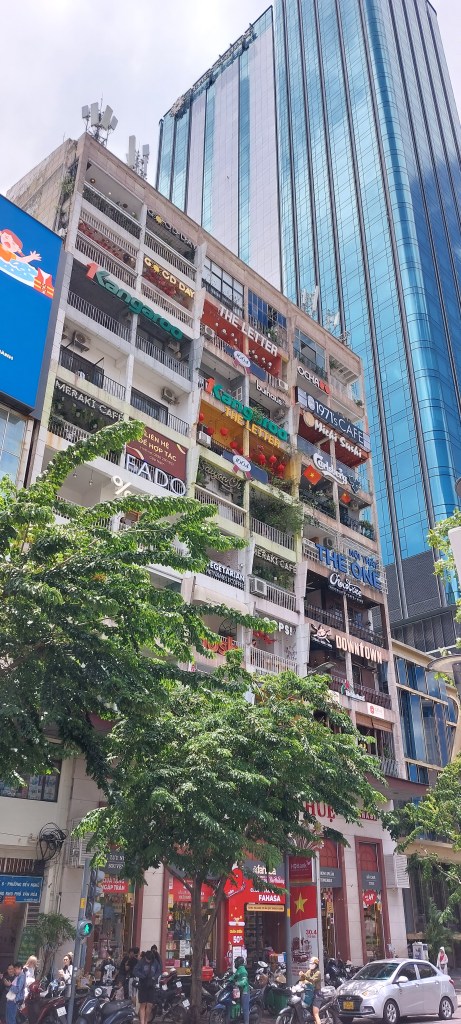
I am not a big coffee drinker. In college and my first few years working, I drank a lot of coffee, to the point that I was no longer sleeping through the night. I decided to cut coffee out of my diet because I was regularly waking up at odd hours, sometimes twice or thrice a night. Recently, however, I’ve enjoyed an occasional taste of the coffees my husband orders, and I felt okay reintroducing it to my system with heavy moderation. When we went to Vietnam, I was fully ready for Vietnamese coffee to become my new personality. Spoiler alert: it kind of did.
The iconic Cafe Apartment is home to nine floors of cafes. While I normally check ratings and reviews before going somewhere for food and drinks, this time, I wanted to explore the building and choose a cafe based solely on vibes.
I ended up at 21 Grams, which is also a vegetarian restaurant. Although the view from the balcony seating was tempting, I opted to sit inside and avoid the afternoon heat. I ordered their Vietnamese coconut coffee. They serve it iced, with some delightful toasted coconut flakes on top. I am happy to report that it was easy on my low caffeine tolerance! I think of it as a “dessert” coffee, but the sweetness is well-balanced.
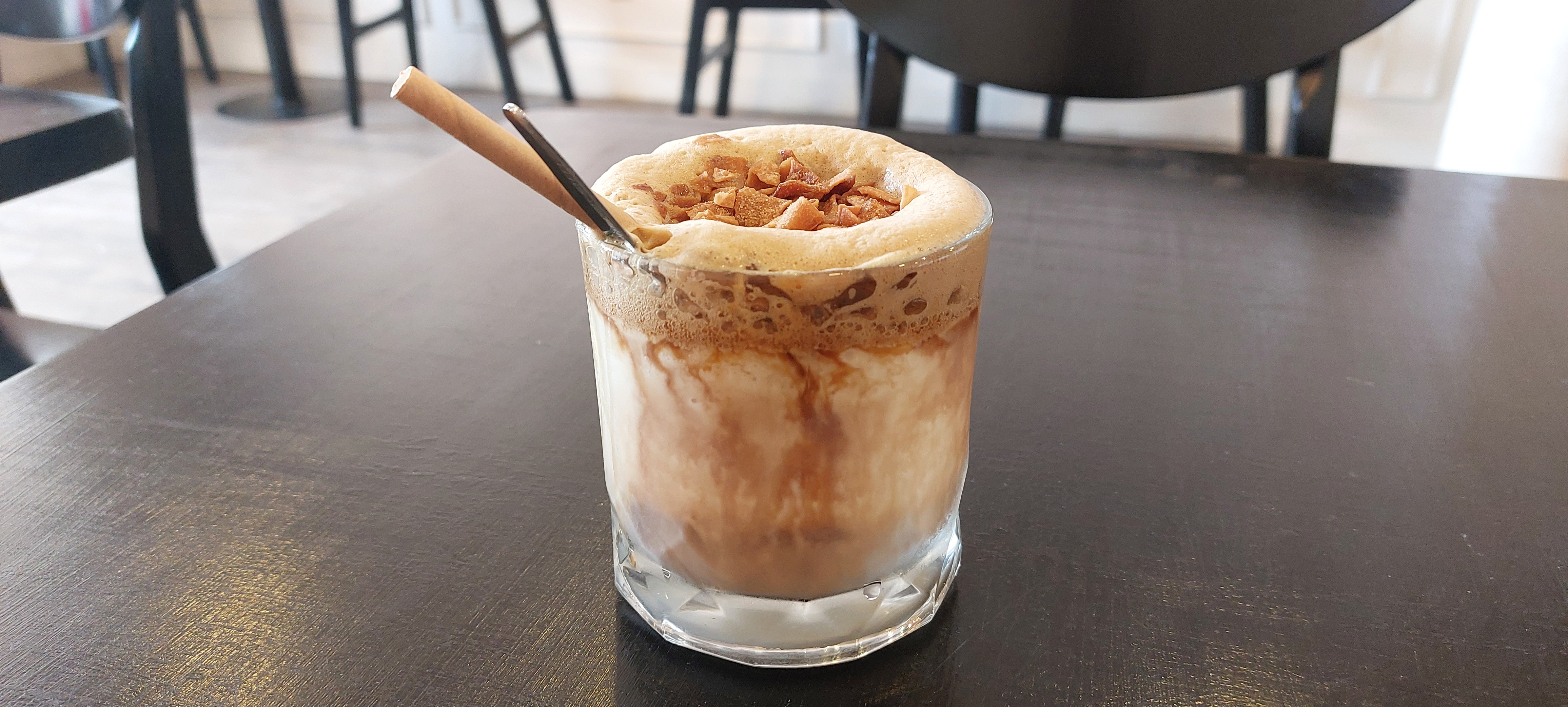
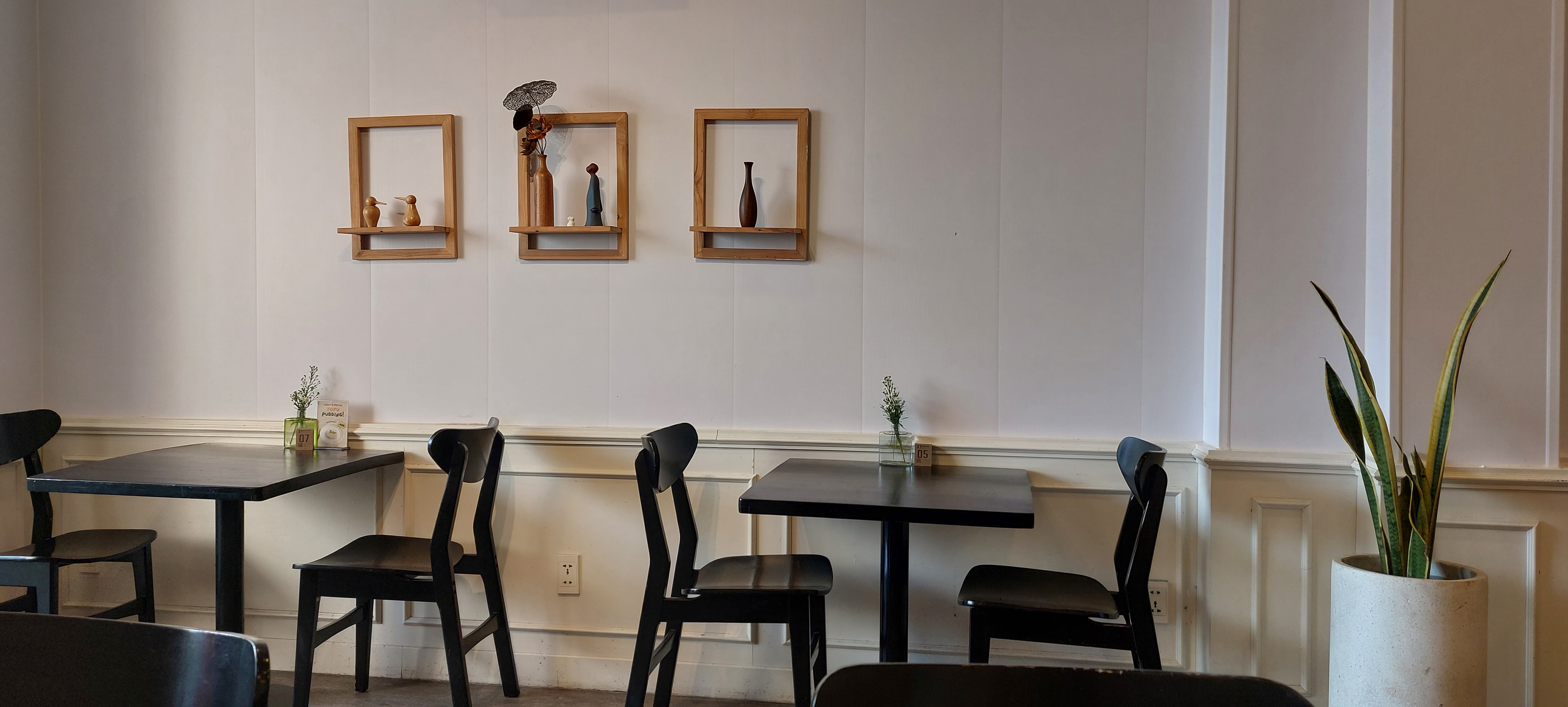
21 Grams is on the fourth floor of the Cafe Apartment, located at 42 Nguyễn Huệ Street, Quận 1. The Vietnamese coconut coffee is VND59,000, or about PHP128. For more updates, check them out on Facebook and Instagram.
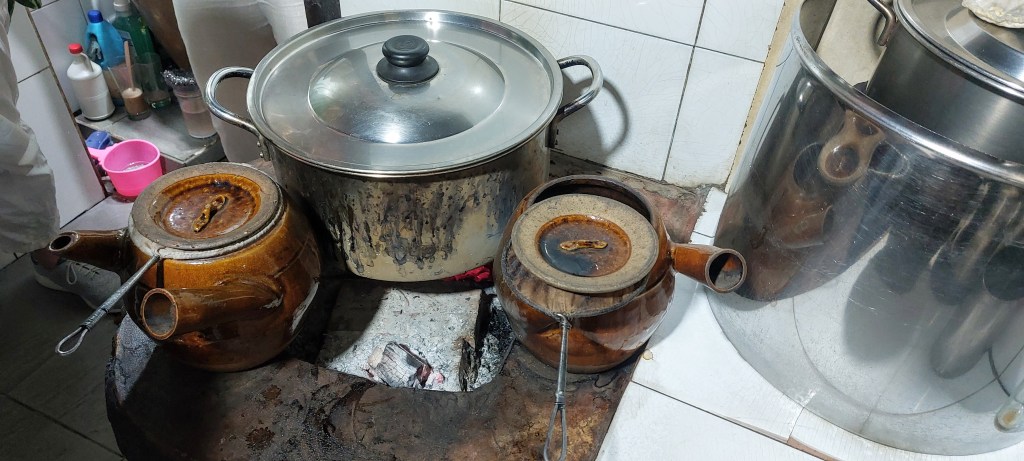
Our last walking tour of the trip ended at the oldest cafe in Ho Chi Minh, the Cheo Leo Cafe. They make their coffee the low-tech, old-fashioned way, with clay pots over a charcoal fire. We were lucky to be able to take a peek at their process in the kitchen.
I asked our guide, Hieu, for something light, citing my low caffeine tolerance. We also had a coffee workshop later that day, and I didn’t want to overwhelm my stomach or nervous system. He ordered me a lime coffee (center in the photo below). He described it as similar to cold press coffee, with a dash of lime juice. I liked that I could still taste the bitterness of the coffee. The citrus was unexpected but refreshing.

One interesting thing about many cafes is that they serve your coffee with a side dish (or side drink?) of tea. You wouldn’t normally drink both coffee and tea in one sitting, but this tea is usually quite weak and is meant to cleanse your palate and offset the strong coffee.

Cheo Leo Cafe is located at 109/36 Nguyễn Thiện Thuật, P.2, Q.3. Learn more on their Facebook and Instagram profiles.

 'Ka ni Kim
Leave a reply to How much does a trip to Vietnam cost? – ‘Ka ni Kim Cancel reply